§ 1 · Twenty-three
When I was twenty-three, I thought I had made it.
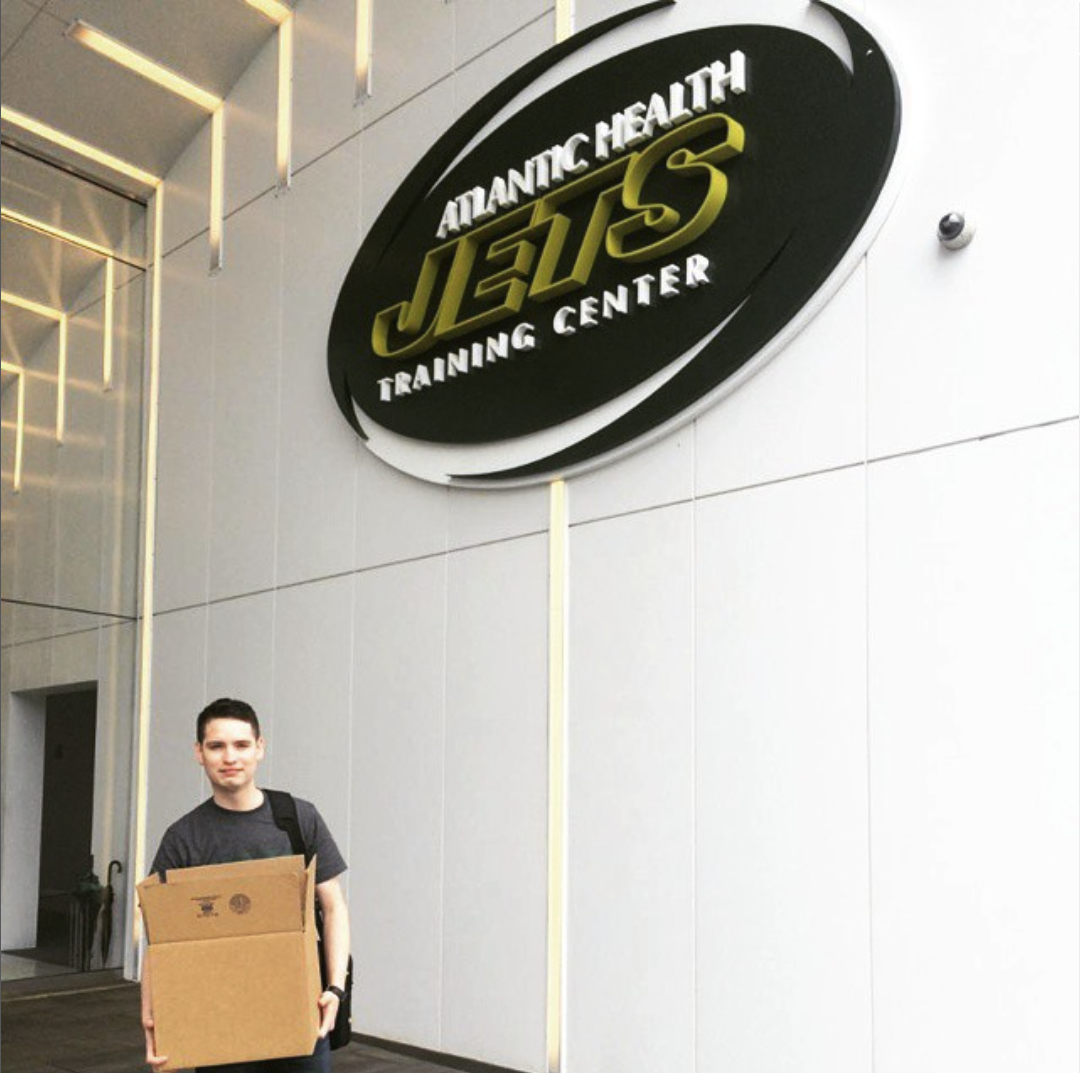
I was working for the New York Jets. That sentence was the whole accomplishment. The job didn’t pay much and I didn’t care — it was the NFL, and everyone around me was very good.
The Rex Ryan years. Sanchez, Santonio, Revis on an island. Loud, and usually in the middle of the argument.

Five seasons later I had a different definition of the word.
§ 2 · I said I knew Avid
I came in as an editor. One problem: I didn’t know Avid Media Composer. I knew Final Cut. So when I applied, I said I knew Avid better than I did.
There. It’s on the record now.
But I knew I could edit. Editing is editing. Then they hired me and I had to prove it.

I learned fast. Highlights, player features, charity pieces. Each season they handed me more. Eventually I was helping technical direct Jets Talk Live — players and coaches after practice. P2 cards and TriCasters, impossibly advanced to me then.

I didn’t walk in knowing any of it. I figured it out because people gave me room to. That was the first lesson: you don’t have to be ready before you say yes. You need enough underneath you to work out the rest.
§ 3 · Tone
Something else happened that year that seemed like nothing.
I loved watching Santonio Holmes. During that 2010 run he kept turning up exactly when the Jets needed him. My coworker Alex Darcey noticed. So he started calling me Tone.
Santonio. Tone.


Then it grew. I’d talk about starting my own company someday, and Alex started calling it Tone Media. There was no Tone Media. No website, no clients, no plan. Just two coworkers.
Years later it became the name of the company my wife and I built. That’s the part I can’t get over — it got its name inside that building, from somebody making fun of me.
§ 4 · The cost of yes
Around 2013 I started looking at the job differently. I got married. What I wanted changed. And I started to understand what professional sports costs, in a way I couldn’t at twenty-three.
The schedule is the schedule. Games don’t care about your plans. There were sacrifices around my honeymoon, and outside work I turned down. Three times a director called about a job overseas, and three times I said no — that one has its own story.
Nobody made me do any of it. But I hadn’t worked out yet that every yes is also a no to something you can’t see from where you’re standing.


The other thing I misunderstood was how people find you. Freddy Garcia was freelancing for us — in an organization that size, somebody passing through. He opened the door for me at NBC, and started me thinking about real estate, which became a second life.
I thought career growth meant climbing something. The person who changed my trajectory was a freelancer who sat near me.
§ 5 · Both things were true
By the end I had real responsibility, which is probably why leaving surprised people. From where they sat, I’d become someone they could depend on.
From where I sat, the workload had grown and I wanted to be paid like it. I wanted control over my time. And I’d spent five years in an edit room while people around me built something of their own.
The tell wasn’t unhappiness. I was happy. The tell was that nothing in that building scared me anymore.
Both things could be true. The Jets could value me more than they ever had, and it could still be time for me to go.
That’s what made it hard. If I’d hated it, this would be easier to tell.
There was no villain. Chad Freeman, Jason Lavine, Chris Ubbens and others took a chance on a young editor and handed him experiences he had no business getting. Jason especially — a fan since he was a kid; the Jets meant more to him than a résumé line.
Being grateful for an opportunity doesn’t obligate you to stay in it. That one took me years.

At twenty-three, “I work for the New York Jets” was the accomplishment. I wanted the name more than I understood the craft. Hard to admit, and true.
And I spent five years in an NFL media department barely picking up a camera. I was an editor — which sounds impossible now. But maybe I had to become one first. The Jets taught me story, pacing, music, pressure, and working something out before I was ready.

I wouldn’t tell the twenty-three-year-old not to take it. I’d tell him to run at it. Go to Cortland. Learn Avid. Pay attention to people like Freddy.
Some of the people I worked with stayed, and were right to. Same building, same job, a completely different answer. Neither of us was wrong.
Three years after I left, they called me back for a month. Same building, same software I’d lied about knowing. Leaving didn’t close the door — it stopped being the whole address.

I’d just add one thing: don’t confuse the name with the destination.